May 18, 2026 · 8 min read
His Medical History Was Spread Across Nine Apps. On the Evening It Mattered, He Could Not Open a Single One.
The Ordinary World: The Most Documented Patient in History
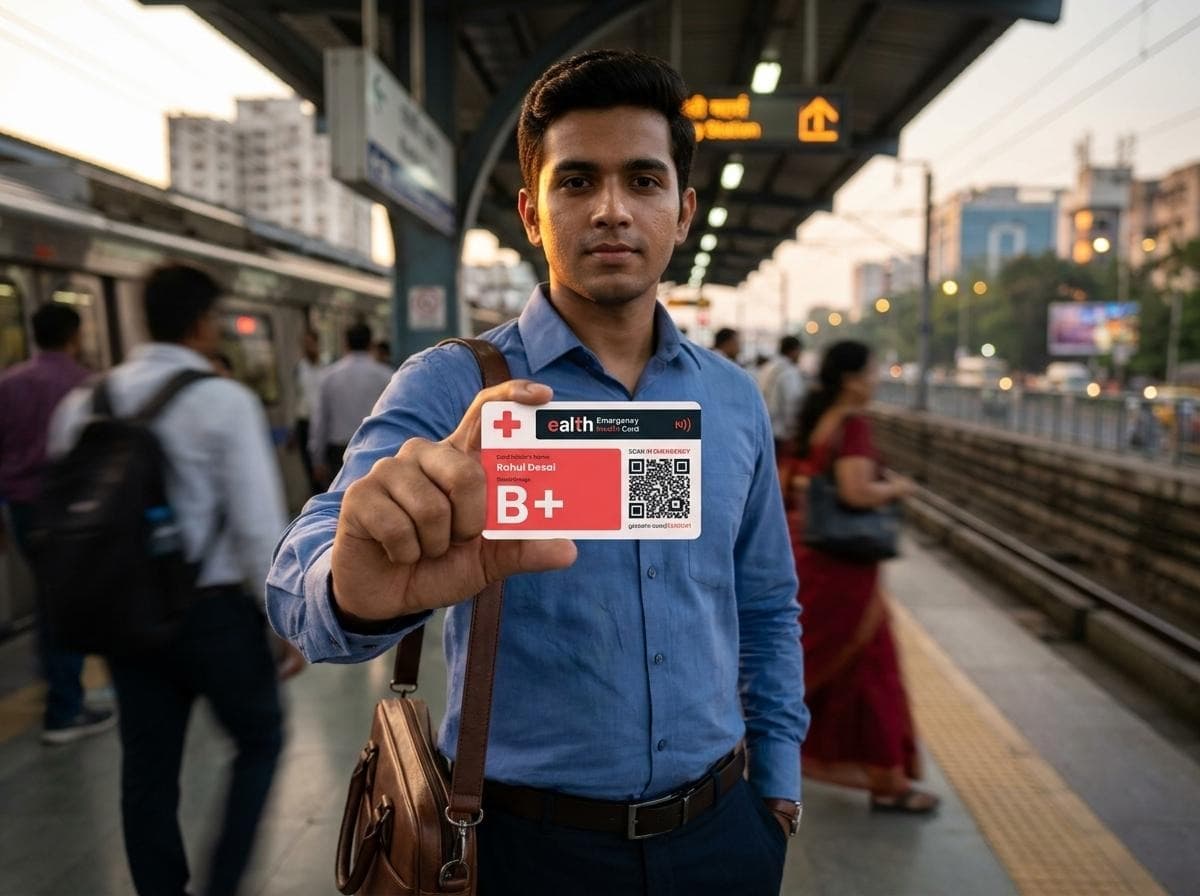
Meet Rahul on the metro platform, formal shirt, laptop bag over the shoulder, heading home after a ten-hour day. By any historical standard, Rahul is the most thoroughly documented patient who has ever lived. His last full body checkup is in his diagnostic chain's app. His prescriptions are in a pharmacy app. His teleconsultations are logged in another. His corporate health insurance lives in an HR portal. His steps, heart rate, and sleep are tracked by the band on his wrist. His company runs an annual wellness camp and the report from it is a PDF in his email.
Never before has so much of one person's medical truth been captured, measured, and stored. Rahul could, on a calm afternoon at his desk, assemble a near-complete picture of his own health in about twenty minutes of opening apps and logging in.
The catch, the one that defines the ordinary world of every Indian corporate employee, is that all of it is fragmented, and all of it requires Rahul to be conscious and holding his unlocked phone. The most documented patient in history is also one of the least reachable, because his documentation is scattered across nine logins that only his living, waking self can open.
The Call: A Tuesday Evening on the Metro Platform
The call to adventure in a corporate life rarely arrives dramatically. It arrives on an ordinary Tuesday.
Rahul is standing on a crowded metro platform. Maybe it is the heat, maybe a skipped lunch, maybe an undiagnosed cardiac issue of the kind that increasingly strikes Indians a full decade earlier than other populations. He collapses. The platform crowd does what Indian crowds do, it gathers, it cares, it wants to help. Someone loosens his collar. Someone calls for the station controller. Someone dials 112.
And then the questions begin, and none of them have answers. Who is he? His laptop bag has a company ID, which gives a name and an employer, not a blood group. His phone is locked. The colleagues who know him are in a different part of the city. His wife is at home, unaware. The HR portal that contains his insurance details is behind a single sign-on that nobody on that platform can reach. The most documented patient in history is lying on the floor as an unknown male, and his documentation might as well not exist.
The Refusal: But I Have All My Reports on My Phone
The corporate professional's refusal of the call is almost a reflex. 'But I have everything on my phone. My reports, my insurance, my doctor's number. It is all there.' It is the comforting belief that digitisation equals accessibility. It does not.
Digitisation has solved storage. It has not solved emergency access. Every app that holds a piece of Rahul's medical truth was designed around privacy and authentication, which is exactly correct for daily use and exactly wrong for the unconscious moment. The pharmacy app protects his prescription history with a login. The diagnostic app guards his reports with an OTP. The insurance portal demands a corporate SSO. These barriers exist to keep strangers out. In an emergency, the stranger trying to get in is the very person trying to save his life.
This is the cruel irony at the centre of modern Indian corporate health. The better documented you are, the more locks sit between a first responder and the information that would help them. Privacy and emergency access are not the same problem, and the apps were built to solve only the first one. The refusal feels logical right up until the moment it is tested, and the moment it is tested is the worst possible time to discover it was wrong.
The Mentor: The Card That Does Not Need a Password
The mentor arrives, as always, with a tool, and the tool's genius is in what it deliberately leaves out: the password.
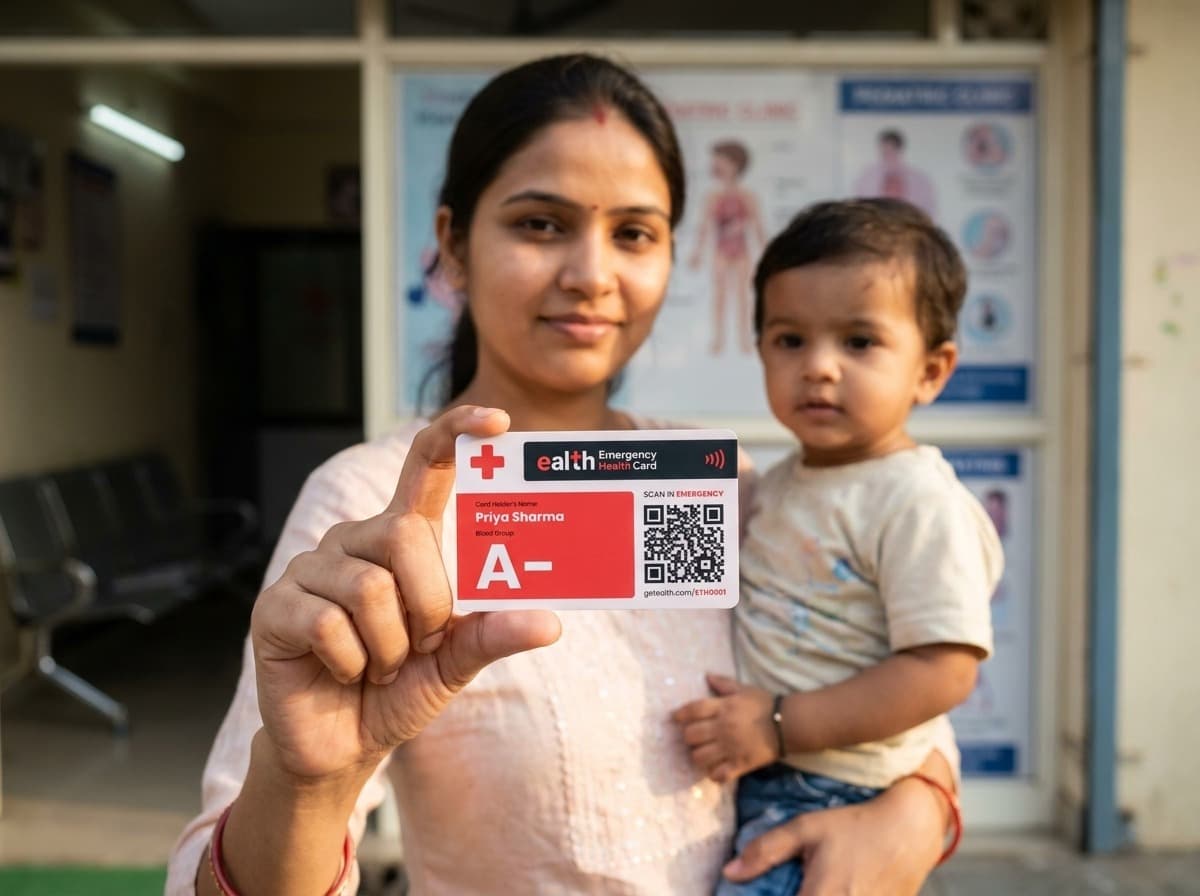
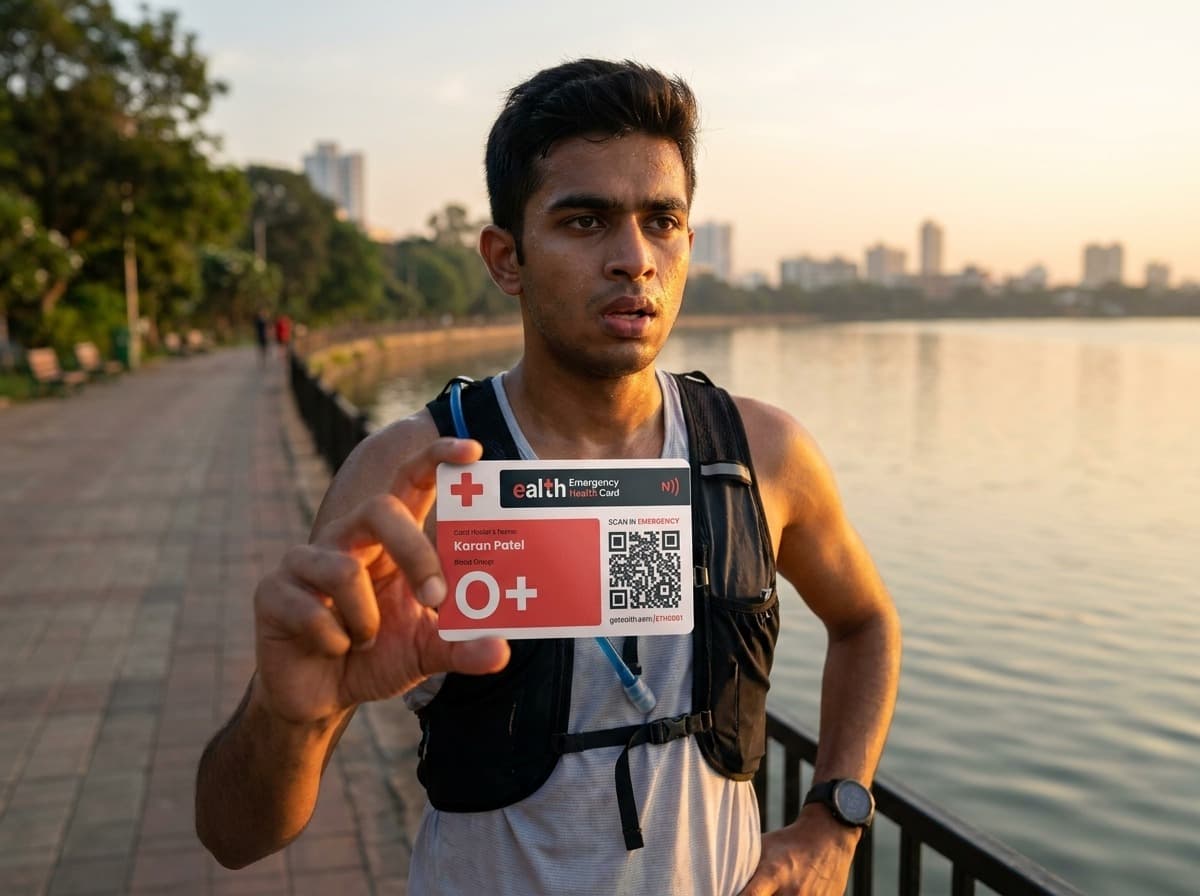
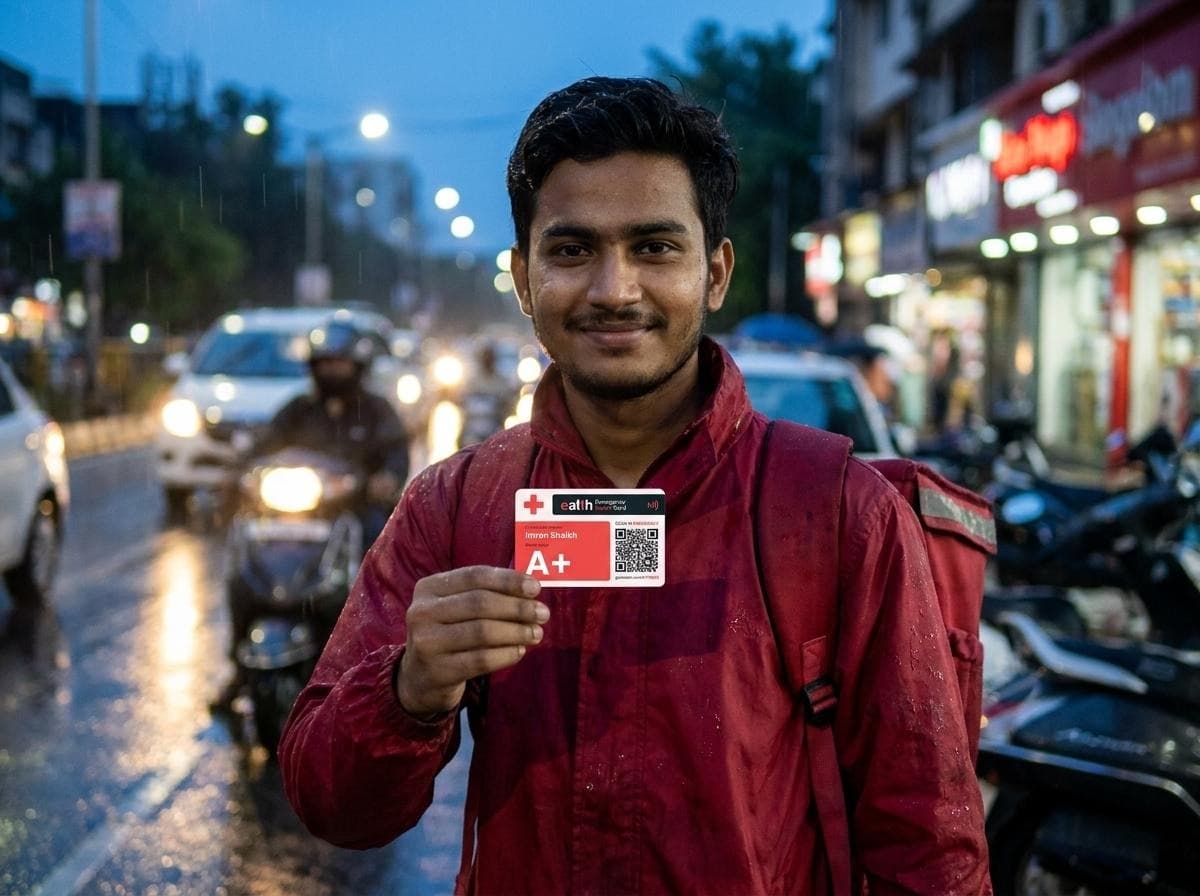
The ealth Emergency Health Card is a PVC card or a small keyfob carrying a QR code and an NFC chip. Any bystander with any smartphone from the last seven years can tap or scan it and reach the emergency profile in under two seconds. No app on their side. No login. No OTP. No SSO. The single design decision that makes it work is the one every other app got right for daily life and wrong for emergencies: this profile is openly readable by whoever physically holds the card.
That openness is bounded and deliberate. The emergency profile shows only what a first responder needs, blood group, allergies, current medications, key conditions, and two emergency contacts with one-tap call buttons. It does not expose the full medical history, the detailed reports, or the insurance documents. Those stay in the app behind your login, where they belong. The card carries the thin, critical layer that saves time in the first ten minutes, and nothing more. The physical card also has the blood group printed on the front, readable even with no phone at all.
For the most documented patient in history, the mentor's gift is not more documentation. It is a single, unlocked, instantly readable summary of the parts that matter when seconds count.
Crossing the Threshold: From Fragmented to Findable
Crossing the threshold, for Rahul, takes one evening. He sets up his profile, links his two emergency contacts, notes his one ongoing medication and his penicillin allergy, and orders the card. It arrives and goes into his wallet next to his metro card and his office ID. His daily routine does not change by a single minute.
What has changed is his findability. Before, Rahul was a man whose medical existence was scattered across nine apps and reachable by nobody but himself. After, he is a man whose critical medical layer travels on the outside of his life, readable by any stranger on any platform in any city.
The deeper shift is psychological, and it shows up in the family. The spouse who always worried about the long commutes and the late nights now knows there is a system. The aged parents who fret every time he travels for work now know that a stranger can reach them in minutes, not hours. Crossing this threshold is quiet, but the people who love Rahul feel it even when he does not mention it.
The Trials: The Commute, the Desk, and the Work Trip
The corporate employee's trials are not Himalayan passes. They are the ordinary, repeated exposures of a working life, and the card meets each one.
The commute is the first. Hours a week on metros, in cabs, on a two-wheeler through traffic that the MoRTH 2023 data confirms is the single largest source of road accident deaths in India, with two-wheelers alone accounting for 44.8 percent of fatalities. The commute is where Rahul is most exposed and least accompanied by anyone who knows him.
The desk is the second, and the one professionals dismiss too easily. Indians develop heart conditions five to ten years earlier than other populations, and a meaningful share of cardiac events now happen to people in their thirties and forties, at work, mid-meeting, mid-deadline. The colleagues around the desk are wonderful in a crisis and useless as a medical record. The card fills exactly that gap.
The work trip is the third. A different city, a hotel room alone, a late client dinner, a conference where nobody knows your medical history. The travelling employee carries all the same risks as the leisure traveller, with less time to prepare and more reason to be exhausted. The card travels the same way the laptop does, automatically, every time.
The Return: The Employee Who Made It a Company Habit
The hero returns and brings the elixir back to the tribe. For the corporate employee, the tribe is the team, and the most powerful version of this story ends not with one card but with a company-wide habit.
Forward-thinking Indian HR and admin teams are beginning to treat emergency identification the way they once started treating health insurance and annual checkups, as a baseline duty of care to employees. A card per employee costs a fraction of a single hospital cashless claim. For a company that already spends on group mediclaim, wellness camps, and ergonomic chairs, providing every employee with an emergency ID that works on the commute, at the desk, and on the work trip is among the cheapest and most genuinely caring benefits available in the Indian market.
The employee who brings this back, who raises it in the team channel, who suggests it to the admin head, becomes the quiet author of a protection that covers hundreds of colleagues. The elixir, in the corporate version of the journey, scales. One person's preparation becomes an organisation's standard.
Your First Step Before Monday Morning
Setup takes about five minutes on getealth.com. You enter your name, blood group, allergies, current medications, any pre-existing condition, and two emergency contacts. You pick the card, the keyfob, or both. The product ships within 48 hours and arrives in three to five working days, anywhere in India. The digital profile is live the moment you finish, so your QR link works from day one.
For an individual professional, ₹499 one-time is roughly the cost of one office canteen lunch, for a layer of protection that rides every commute with you for good. For companies, ealth offers bulk profiles for teams, which means an HR or admin head reading this can protect an entire floor for less than the cost of a single quarterly offsite.
Before Monday morning, before the next crowded platform and the next ten-hour day, set this up. You are already the most documented patient in history. The only thing missing is the one page of it that a stranger can actually read.
Be prepared
Get your Ealth Emergency Health Card
QR + NFC. Blood group laser-engraved. Emergency info accessible to any bystander in under 2 seconds.
Buy your card — ₹499